
Backing up your Contact or User Data before making any large changes, or simply backing them up on a regular (for example, weekly or monthly) basis is a recommended best practice that can help prevent accidental corruption or loss of data in your own workflows.
Go to manager.everbridge.net
1. Dashboard
Keep in mind that not all roles have the permissions to download this data to create backups. We'll begin with our contact data.
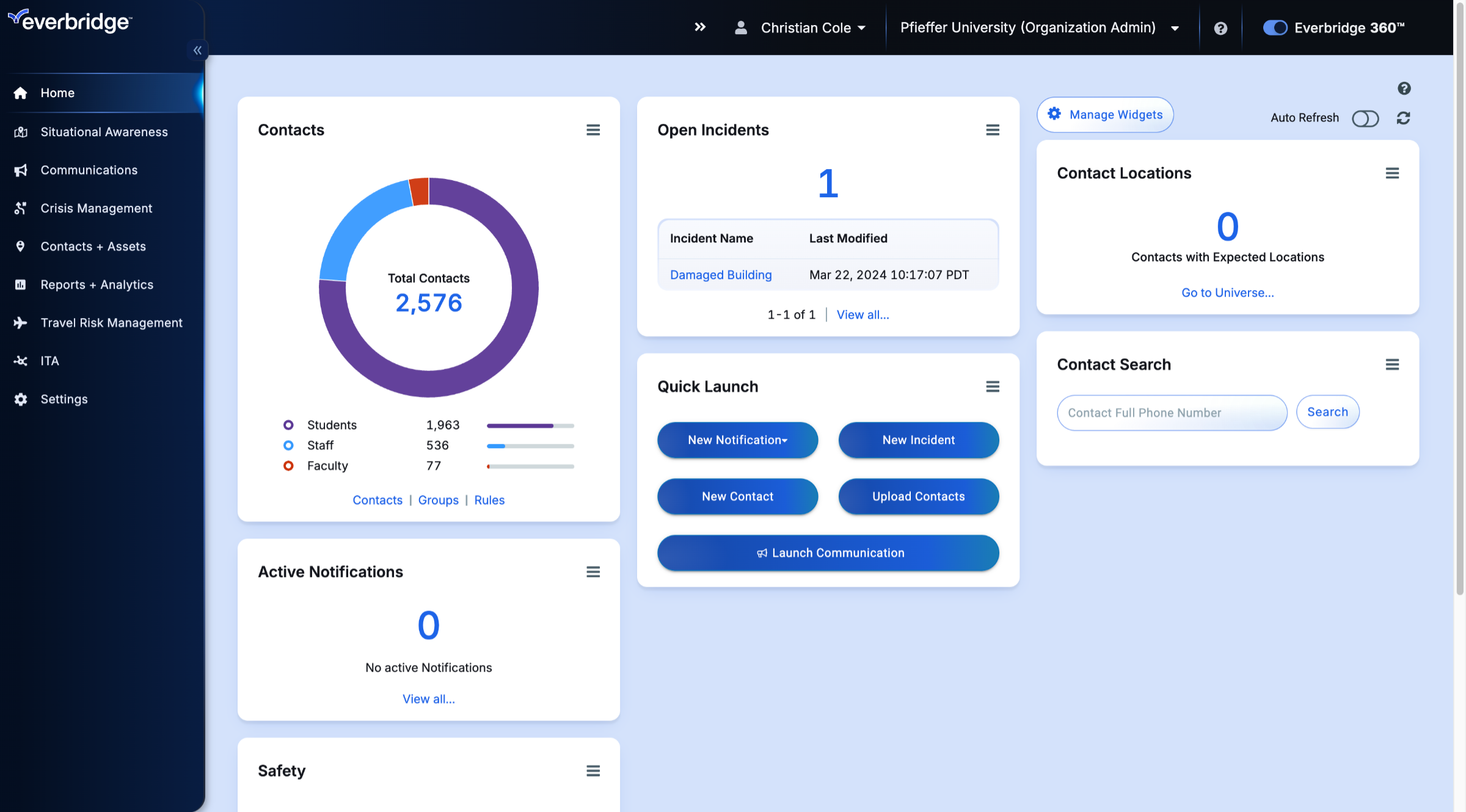
2. Contacts + Assets
Hover over the Contacts + Assets tab.
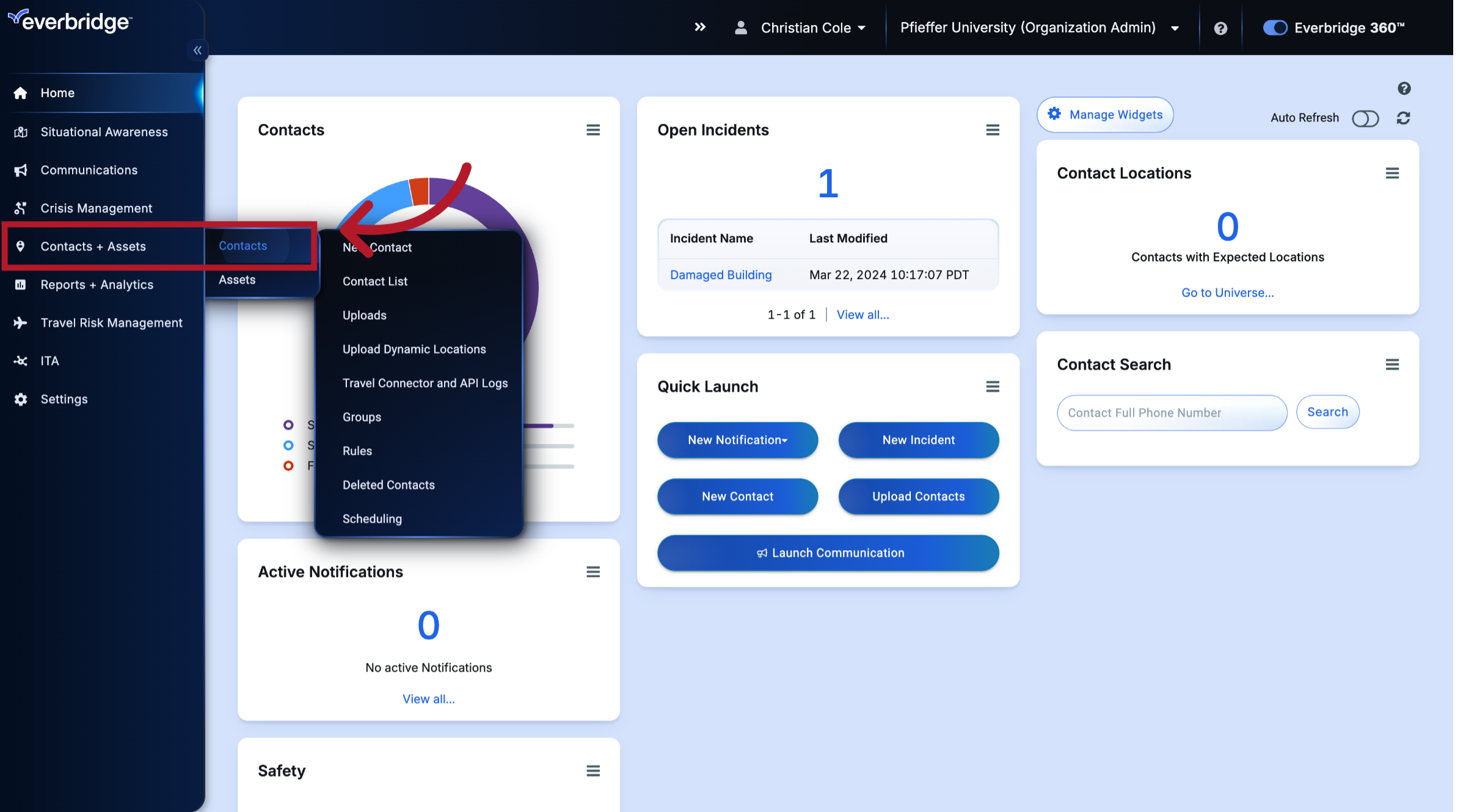
3. Contacts
And click Contact List.
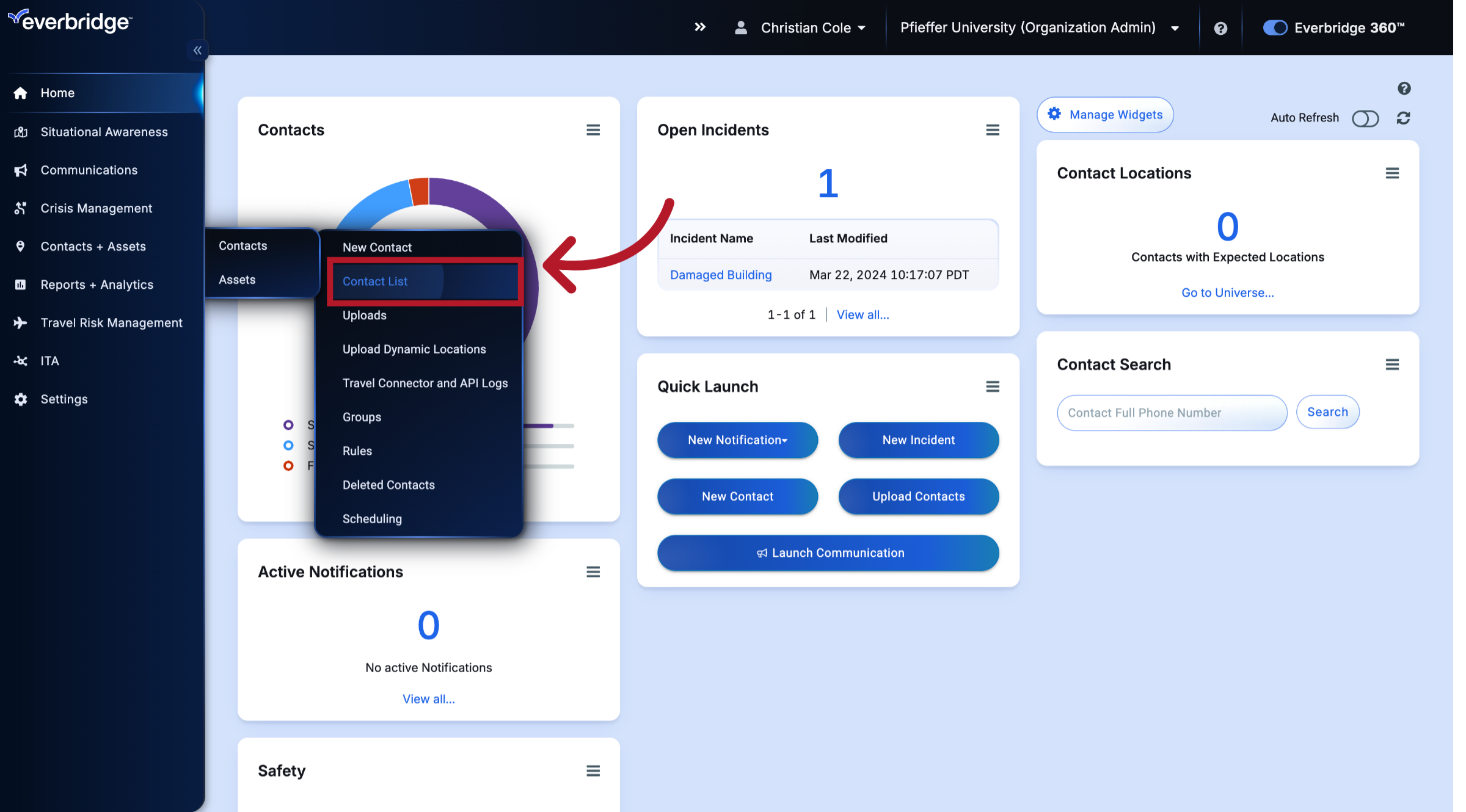
4. Contact List Download
Then click the Download button. This file contains your contacts and their data.
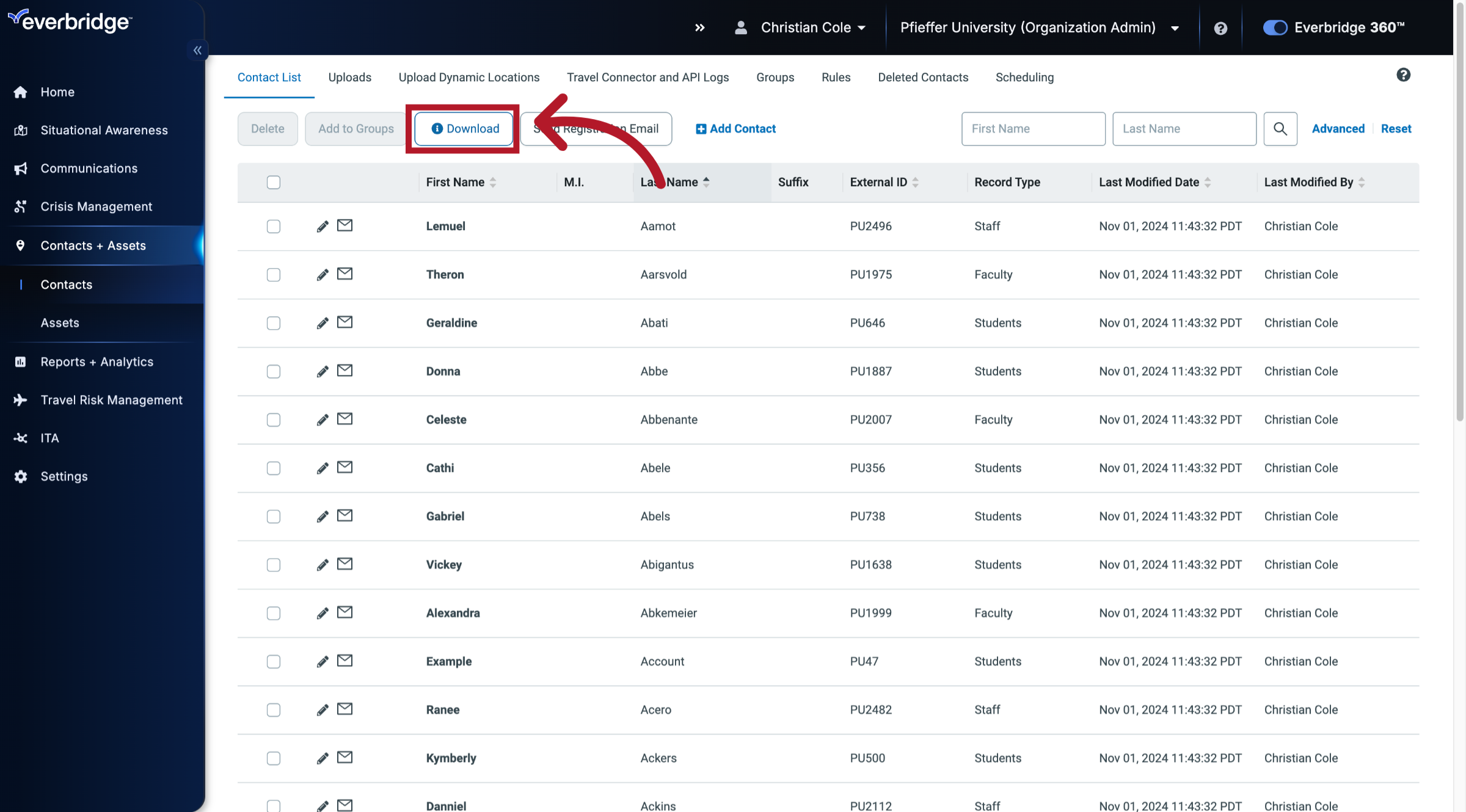
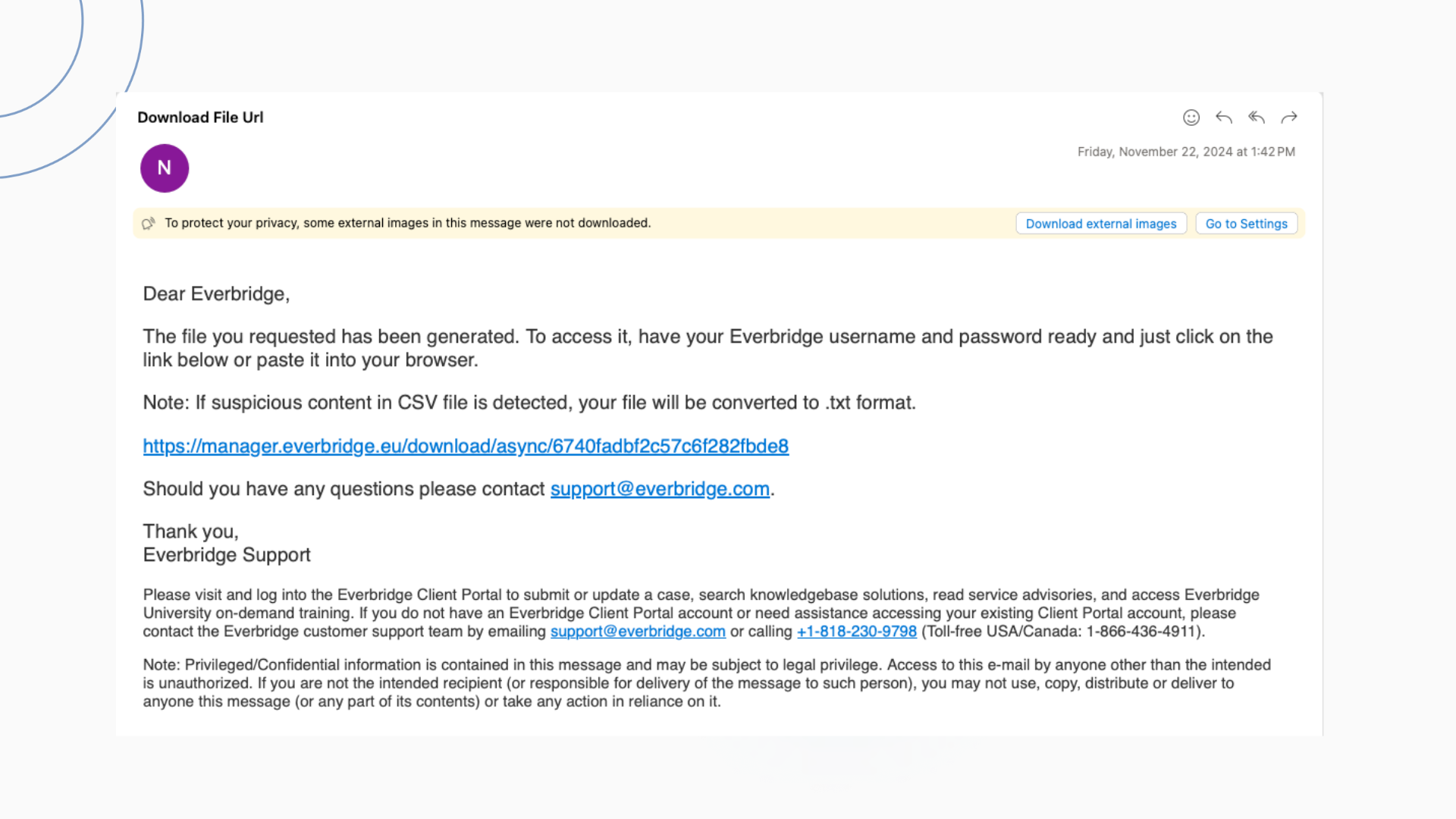
5. Emailed Download File
Depending on how many contacts there are in your organization, that file may be emailed to you.
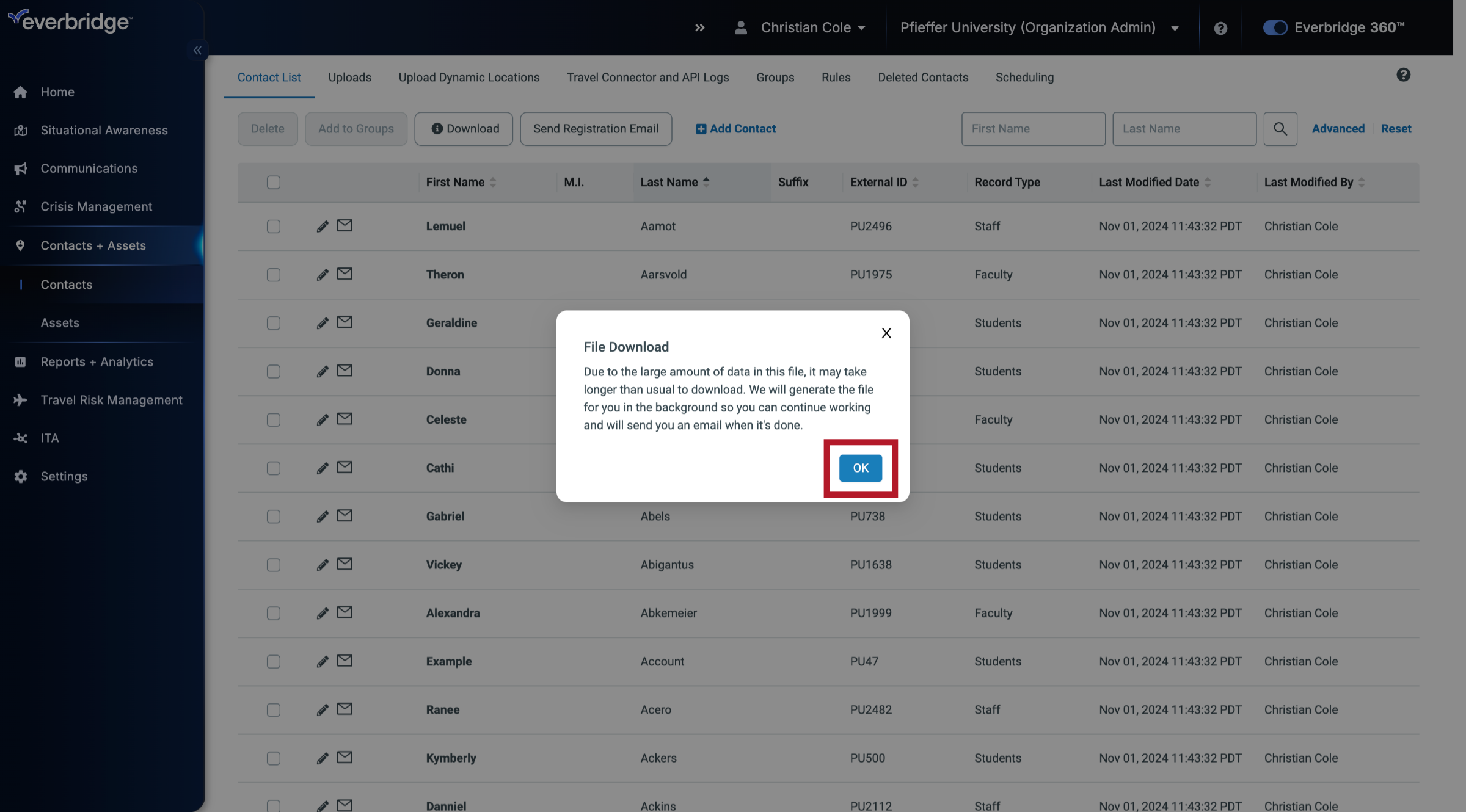
6. File Download
Click OK and save the CSV file in a secure location as part of your regular backup set.
7. User Placement
Users are administrative or system user accounts and are counted separately from Contacts (notification recipients). Users can exist at both the Organization level and the Account level, so the steps to create backups of their data vary slightly.
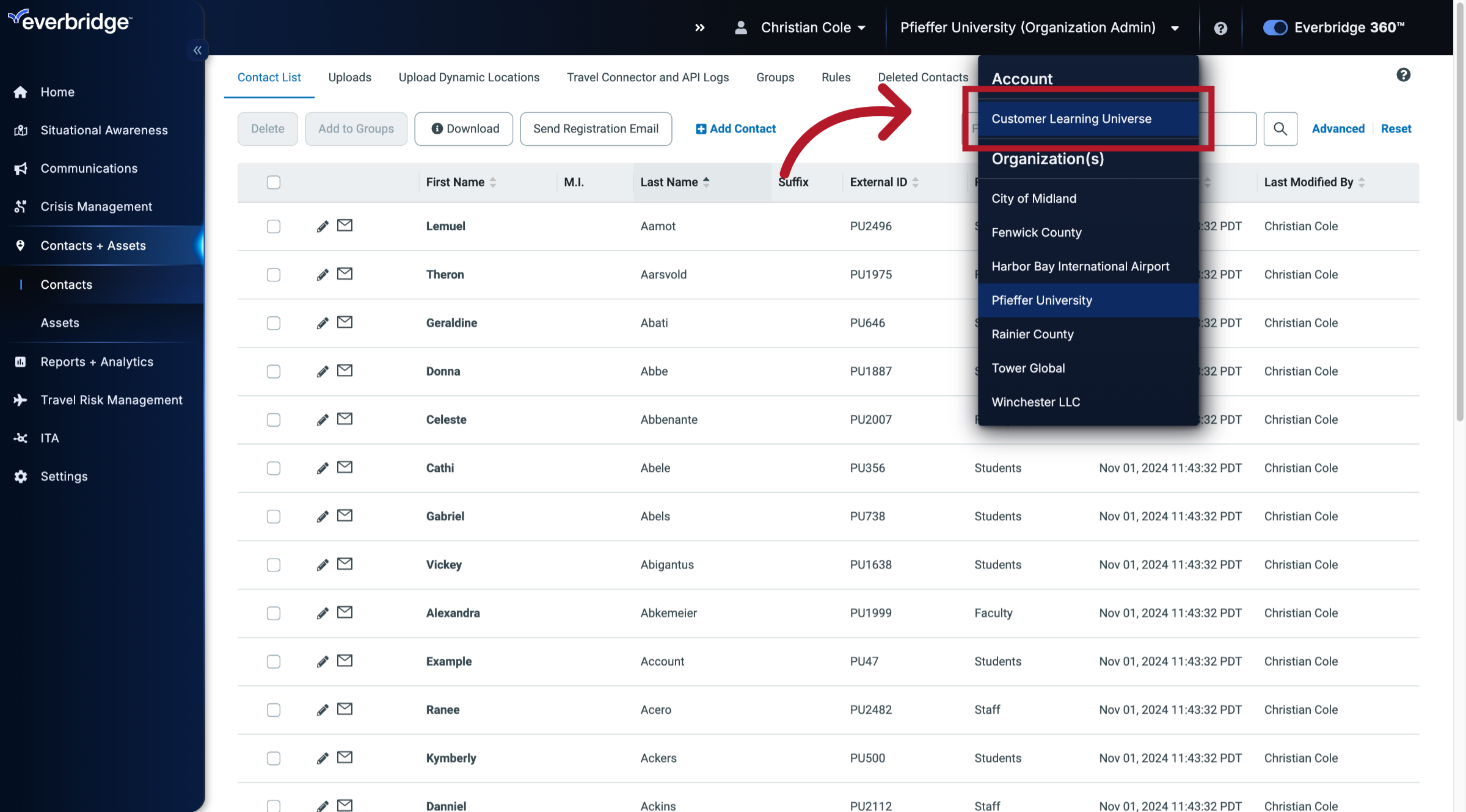
8. Account Level
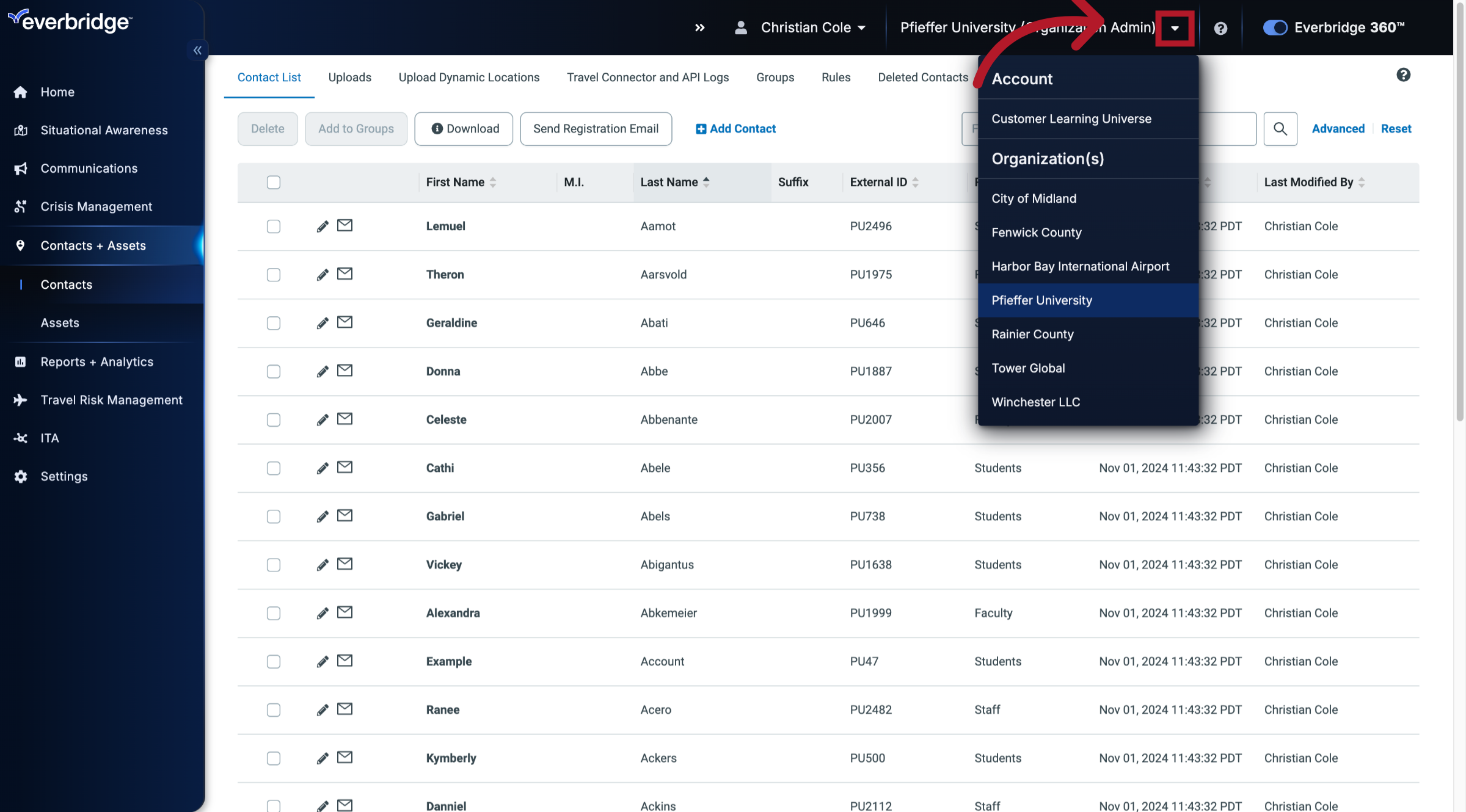
To export users at the Account level (for example, to compare your actual user count to a contracted allotment), first make sure you are on the correct Account view.
9. Account Selection
Select the Account you want to work with. Select the appropriate context before running your user export so the CSV reflects the correct scope.
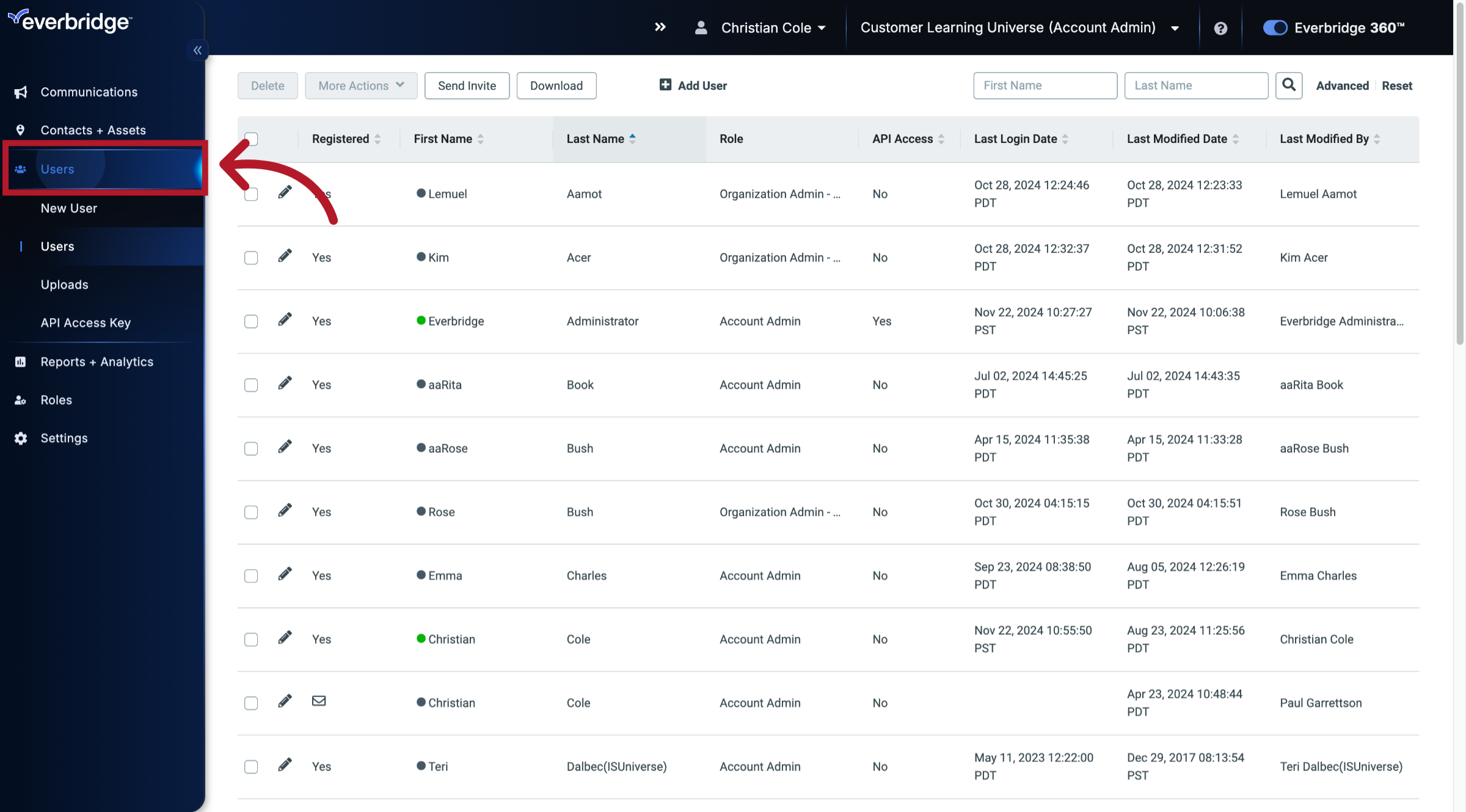
10. Users
Click Users to open the list of system users for the selected Account.
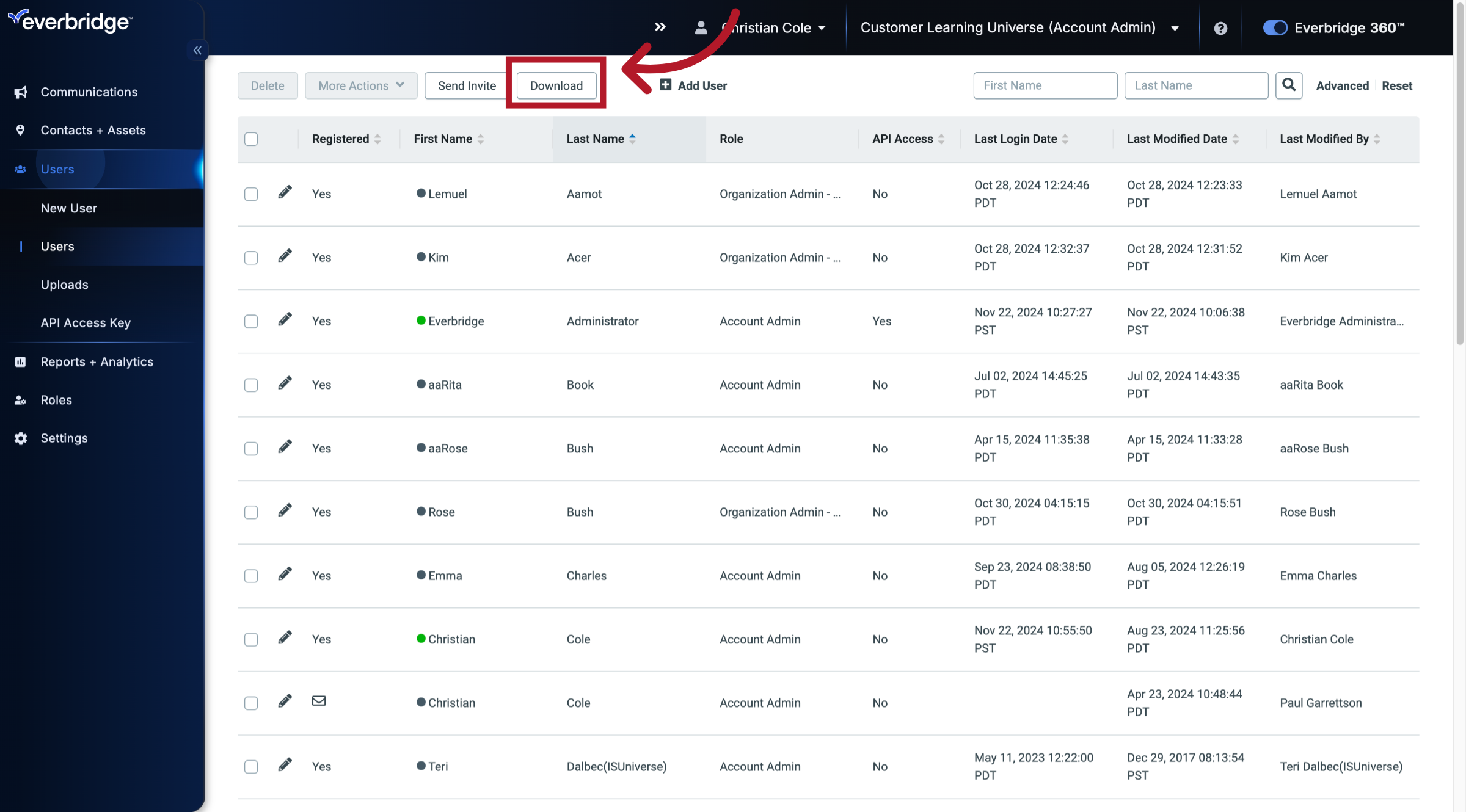
11. Download
Click Download (or the extract/export option, depending on your view) to generate a CSV file of the Account-level users and their data. Depending on the number of users, this file may be provided as a direct download or sent to you via email.
12. Settings
To export users at the Organization level, hover over Settings from the main navigation.
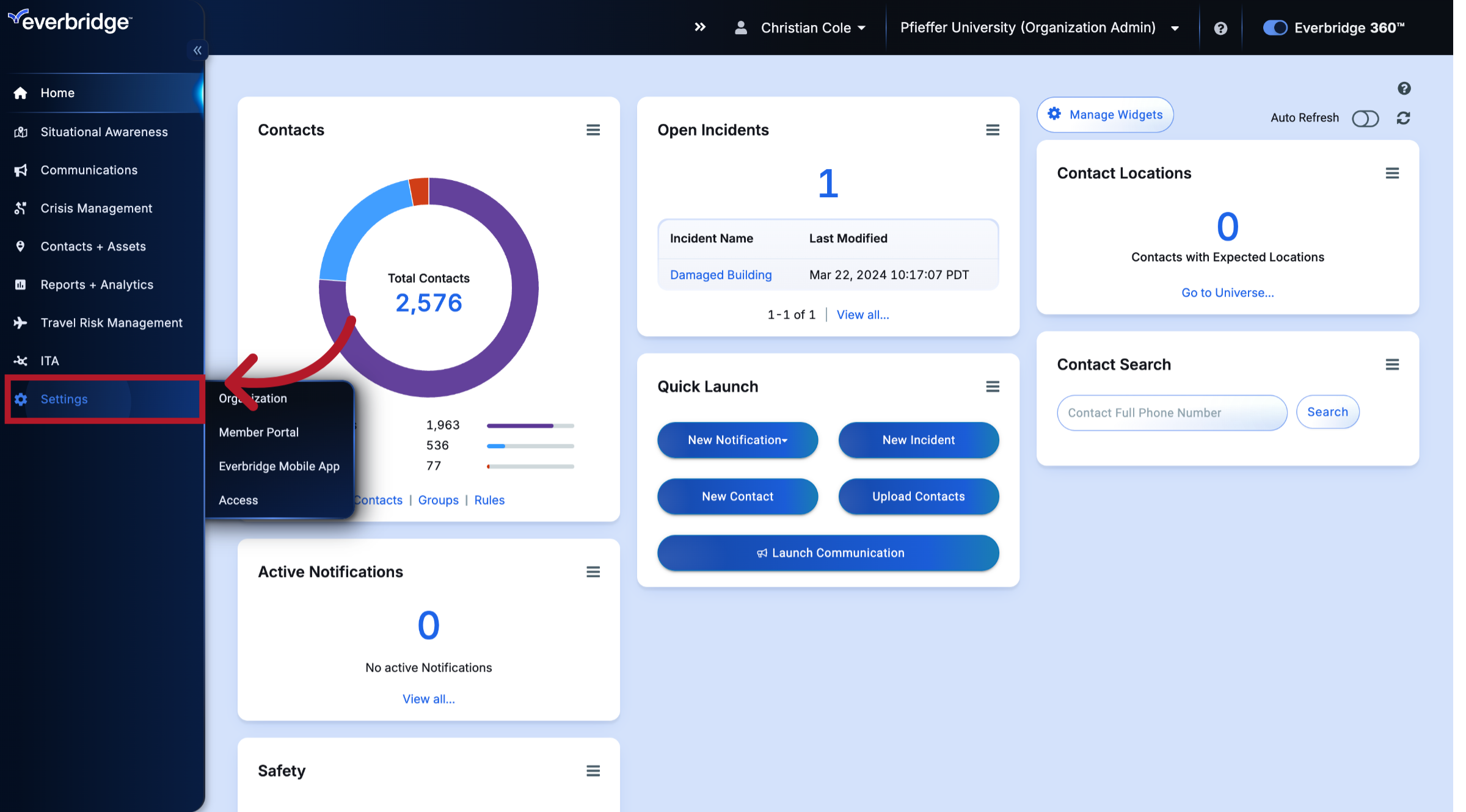
13. Access
Hover over Access.
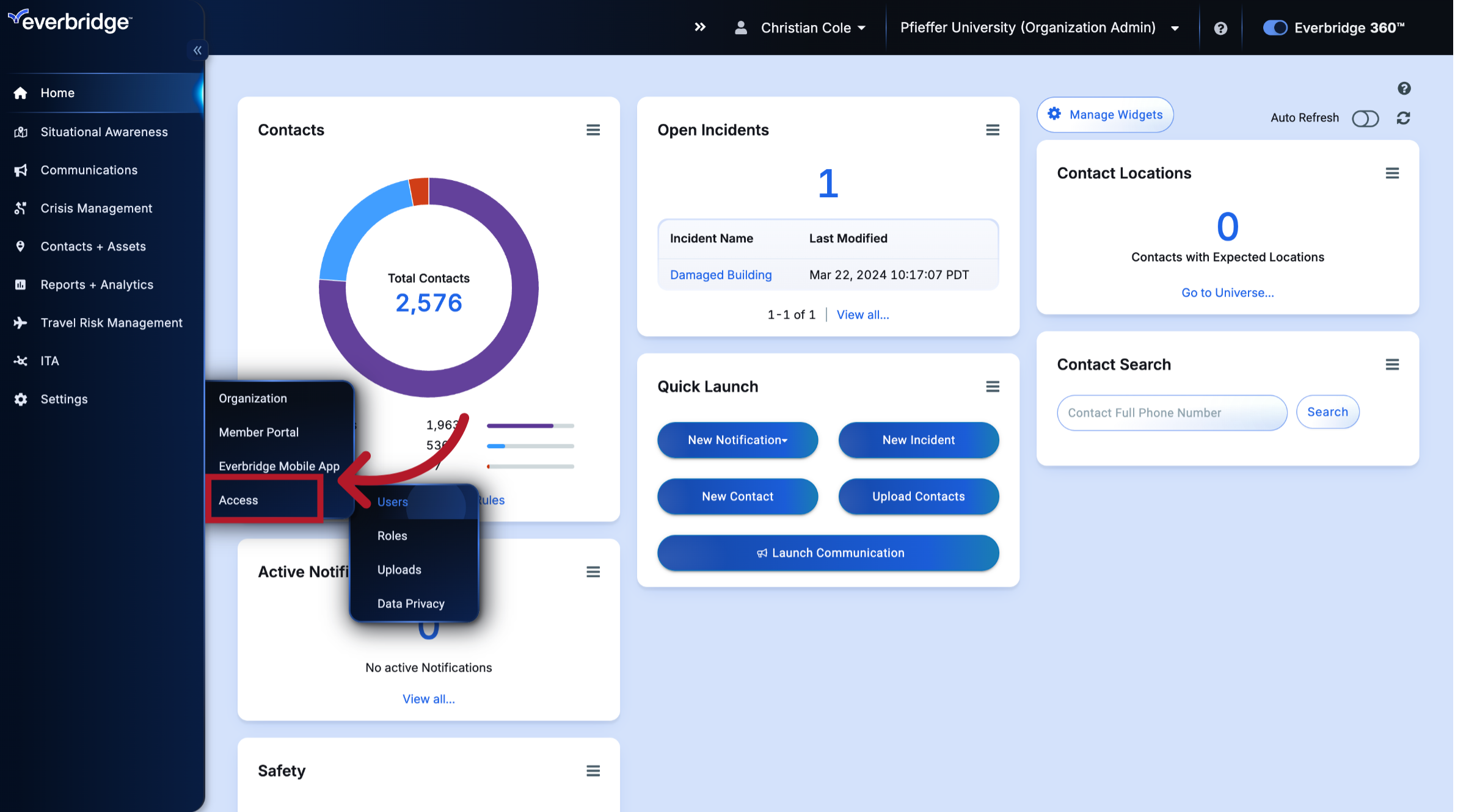
14. Users
Select Users to open the Organization-level user list. From here, you can also use the Download button to export a CSV of users and their data and store it securely as part of your regular backup routine.
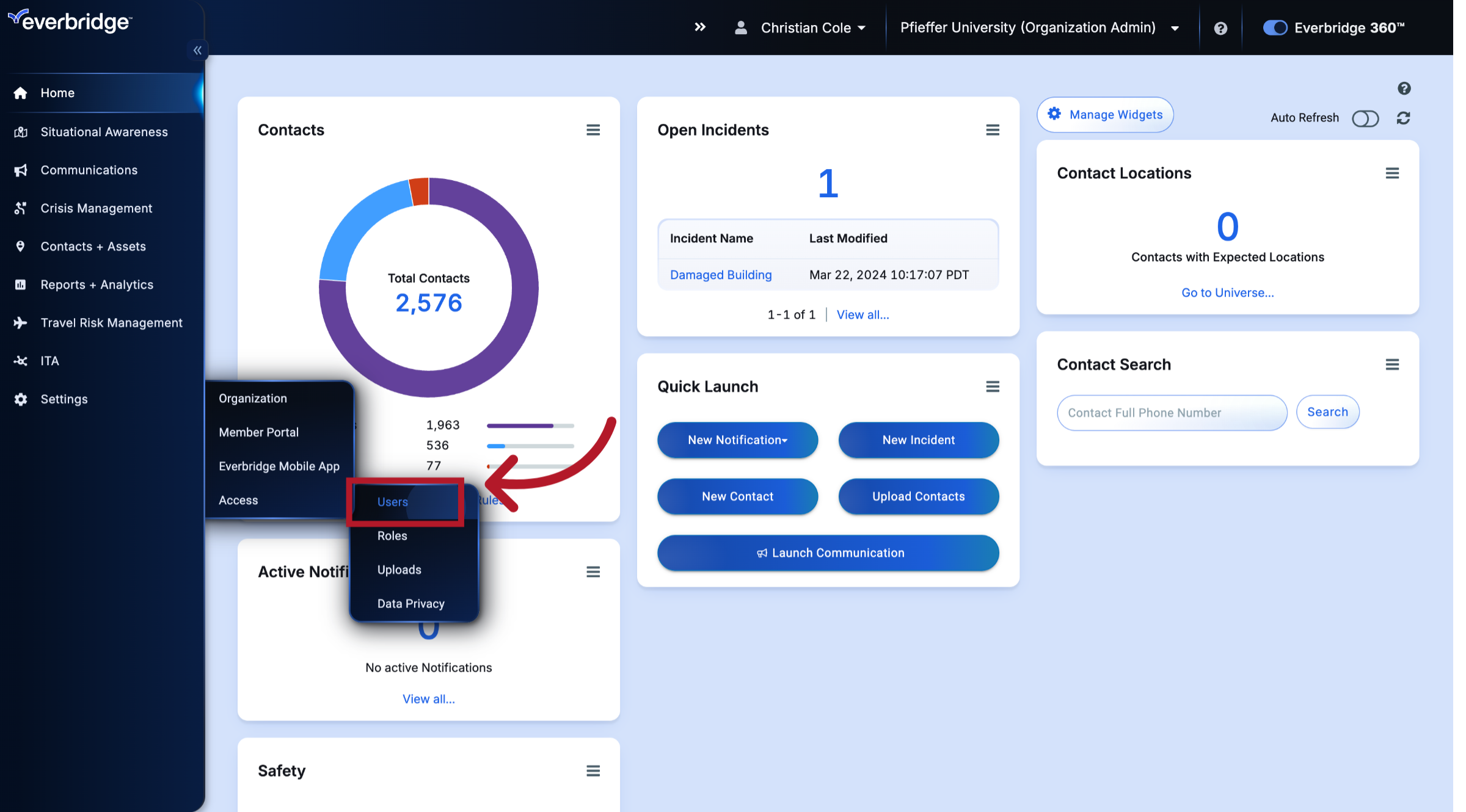
15. Download Button
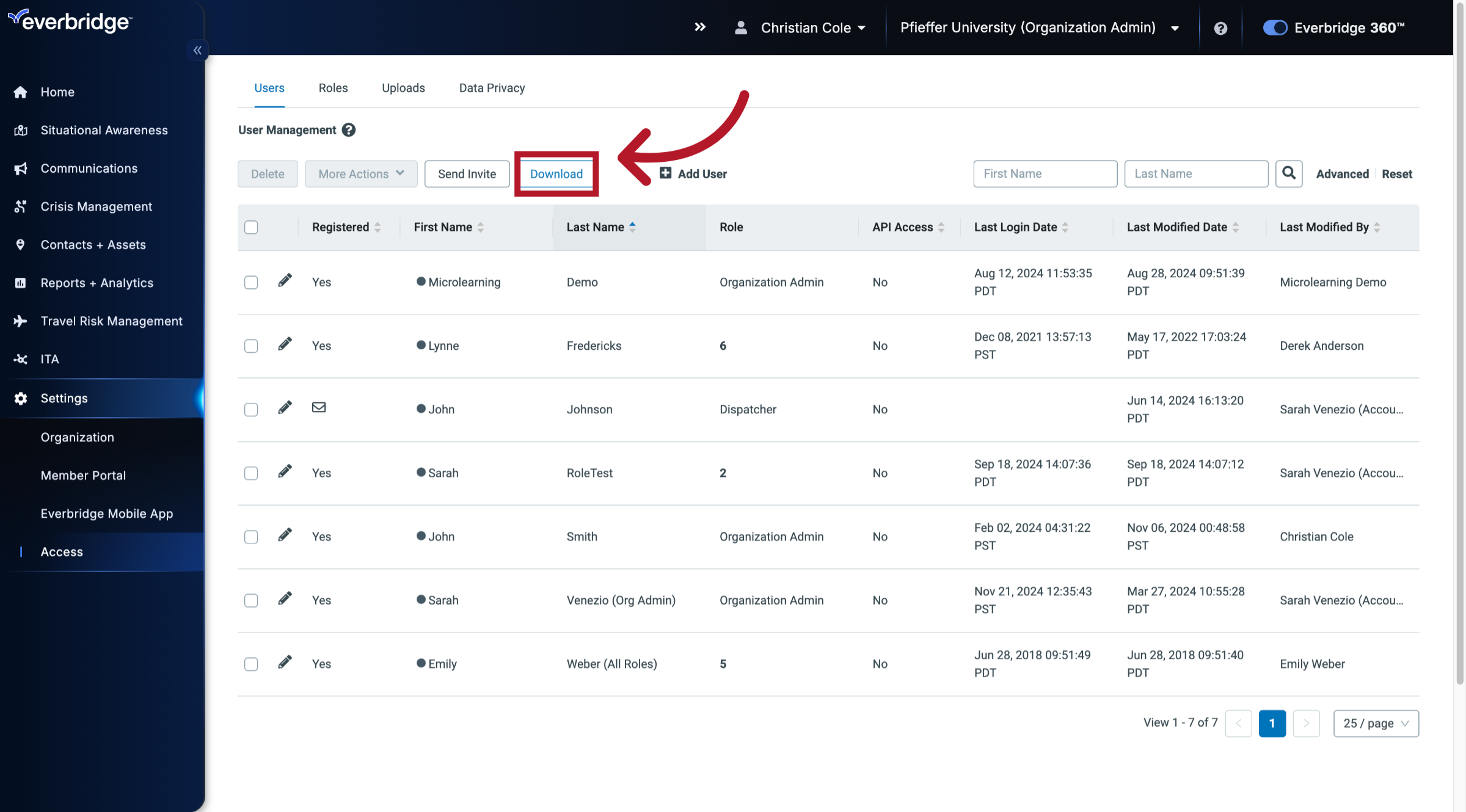
In both places, you'll see a Download button.
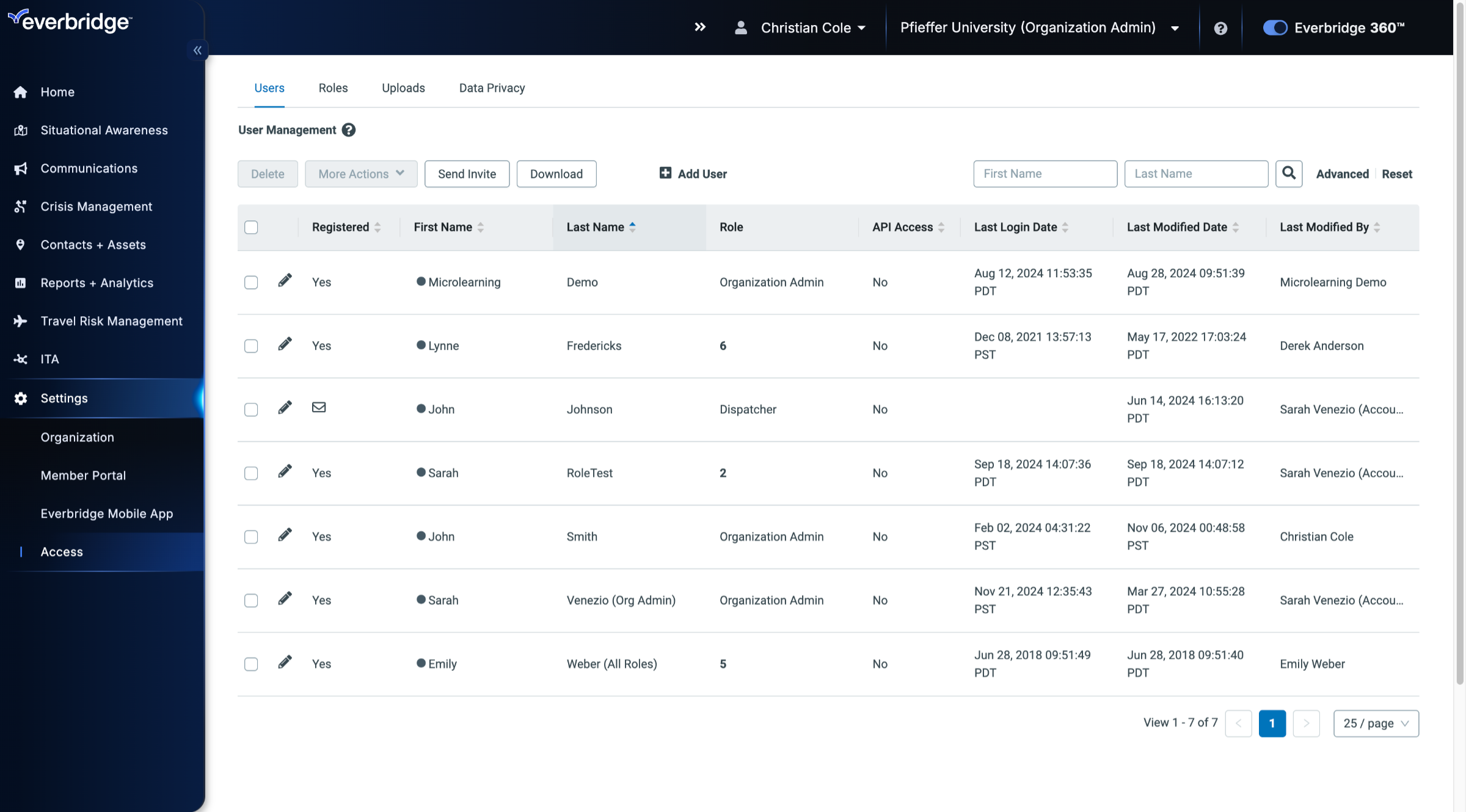
16. Download
Click it to download the CSV file of users and their data. Depending on the number of users, the file may be emailed to you. In both places, you'll see a download button.
In this guide, we covered the essential steps to back up contact and user data in Everbridge Suite. Remember that backing up your data before making any changes is a recommended.
For a comprehensive backup strategy, be sure to include:
Contact List Data – which includes contact records and their group assignments
User List Data – from both Organization and Account levels, so you can quickly compare actual usage to any contracted user allotment and restore system user access if needed
Notification History Data – to retain a record of past communications and recipients where required by your internal policies
Always export the entire contacts dataset (and the full user lists from each relevant level) before making any significant changes or requesting activities such as cloning a production organization to a test organization. While Everbridge backs up all aspects of the Everbridge Suite platform and there are no system-level backup tasks for you to perform, keeping your own regular CSV exports (for example, at least weekly) helps protect against data loss or missing contacts caused by internal processes, file issues, or uploads. With these backup procedures in place, and by securely storing your exported CSV files, you'll be well-equipped to manage and secure your data efficiently.